At age 7, Libby Yamamoto got here house from a sleepover to seek out that her father had been taken away by the village police of their Peruvian city.
It was 1943, and as World Battle II raged, mounting numbers of Japanese in her nation had been additionally rounded up by authorities.
The U.S. authorities had ordered the operation, citing “hemispheric safety,” in keeping with historians and accounts from survivors.
The earlier yr, President Franklin Roosevelt had approved the relocation of individuals deemed to pose a risk to nationwide safety, ensuing within the mass incarceration of greater than 120,000 Individuals of Japanese ancestry.
Now, the federal government effort to lock up Japanese folks was extending past U.S. borders.
Greater than 2,200 Japanese from nations together with Peru and Bolivia had been shipped to the U.S. and confined in focus camps.
Some had been swapped for U.S. residents in a prisoner trade with Japan, in keeping with a lawsuit filed by the ACLU in search of reparations.
“We didn’t know when my dad could be again — or if he was even coming again,” recalled Yamamoto, now 86 and dwelling in Richmond. “They confirmed up so fast, having no rationalization.”
In 1998, the ACLU lawsuit resulted in a settlement with the U.S. authorities granting every survivor from Latin America $5,000 — a fourth of the $20,000 that incarcerated U.S. residents acquired in reparations.
Most took the cash, feeling it was the perfect they might get.
Others thought the smaller quantity was insulting and turned it down, pointing to the double injustice of being delivered to the U.S. in opposition to their will, then getting much less compensation as a result of they weren’t Americans.
With the eightieth anniversary of Roosevelt’s Govt Order 9066 on Saturday, advocates are in search of full reparations for the internees from Latin America, lots of whom have died or are of superior age.
Subsequent Thursday, advocates plan to flood the White Home with cellphone calls as a part of the Marketing campaign for Justice: Redress NOW for Japanese Latin Individuals.
Grace Shimizu of Oakland, whose father and different relations had been transported from Peru and incarcerated within the U.S., is director of the Japanese Peruvian Oral Historical past Venture and the Marketing campaign for Justice.
The anniversary, in addition to the latest racial reckonings and rise in anti-Asian hate, make this the correct time for an additional push for reparations, she mentioned.
“Think about the grief, the phobia of being taken away out of your nation, stripped of your rights, touchdown within the U.S. and never talking English and never given selections,” Shimizu mentioned. “We predict 80 years is sufficient. We shouldn’t have to attend longer for correct justice.”
Phil Tajitsu Nash, lecturer and co-founder of the Asian American Research Program on the College of Maryland, mentioned many younger folks have by no means heard about this “horrible” chapter of World Battle II historical past.
“We’re doing this to vaccinate a brand new era in opposition to the lethal virus that's racism,” he mentioned. “It’s a virus that’s been round earlier than COVID and can keep after COVID — and the timing’s optimum,” mentioned Nash, additionally a co-president of the Asian American Authorized Protection and Training Fund.
In Peru and different Latin American nations, Japanese immigrants had been farmers and businesspeople.
On their method to the U.S. focus camps, some had been pressured to chop brush with machetes in blistering warmth at a means station in Panama.
After their years within the camps, many had been deported to Japan. Youngsters born to them whereas incarcerated had been U.S. residents and acquired the complete $20,000, regardless of being too younger to recollect the expertise.
Rose Akiko Nishimura’s household had a enterprise importing textiles and manufacturing costume shirts in Lima, Peru.
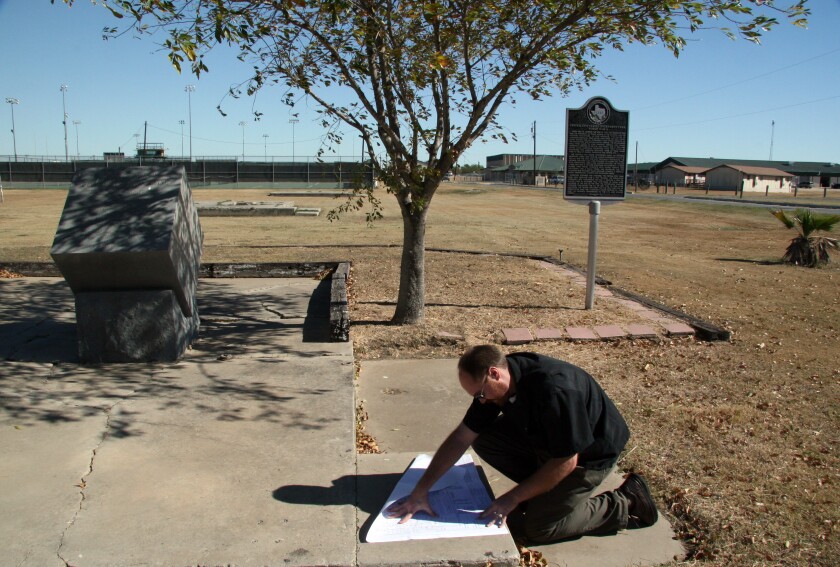
As a lady, she was pressured onto a U.S. Military ship and despatched to a focus camp in Crystal Metropolis, Texas.
After she and her household had been launched, they needed to return to Peru, however the authorities wouldn't settle for them, so that they remained within the U.S.
Tensions erupted amongst Nishimura and her siblings over whether or not to take the $5,000 settlement. She and her sisters accepted it, whereas her brothers didn't.
“I don’t perceive why we're receiving lower than the Japanese Individuals. We suffered equally as they did,” Nishimura mentioned in a court docket declaration in 1999. “Certainly, when you concentrate on it, maybe much more as a result of we had been snatched from our personal nation and delivered to an odd land whose language we didn't know.”
Yamamoto, the Richmond resident, spent her early childhood in a Peruvian village referred to as Hacienda Tuman. Her father, Usaburo Maoki, owned a basic retailer there and a tire restore store within the neighboring metropolis of Chiclayo.
After Maoki was taken away, he was transported to Panama alongside together with his youthful brother, the place they dug ditches and cleaned bogs, Yamamoto mentioned.
The brothers had been first held at Camp Kennedy in Texas earlier than shifting to the Crystal Metropolis camp. Maoki’s spouse and youngsters had been additionally forcibly faraway from Peru and ultimately joined him at Crystal Metropolis, the place they lived till Could 1947.
At struggle’s finish, “they informed us, ‘All you folks from Peru, return to Peru or Japan. You may’t keep right here. You’re unlawful aliens,’” Yamamoto recalled. “However Peru wouldn’t take us. Moreover, my father had misplaced all the pieces. We had nothing to return to.”
An aunt and a niece helped with their funds and located housing for them in Berkeley. They stayed within the U.S.
Maoki endorsed his daughter to not stay her years in anger.
“He mentioned that in wartime, even essentially the most logical nation can do essentially the most illogical, atrocious factor. We have now to maneuver on to forgive,” Yamamoto mentioned.
“But victims who had been kidnapped nonetheless deserve recognition. If nothing else, the federal government ought to make amends.”
Post a Comment