How the Satan’s Gap pupfish has survived for hundreds of years in a spa-like cistern cloistered by a barren rock mountain in Dying Valley Nationwide Park stays a organic thriller.
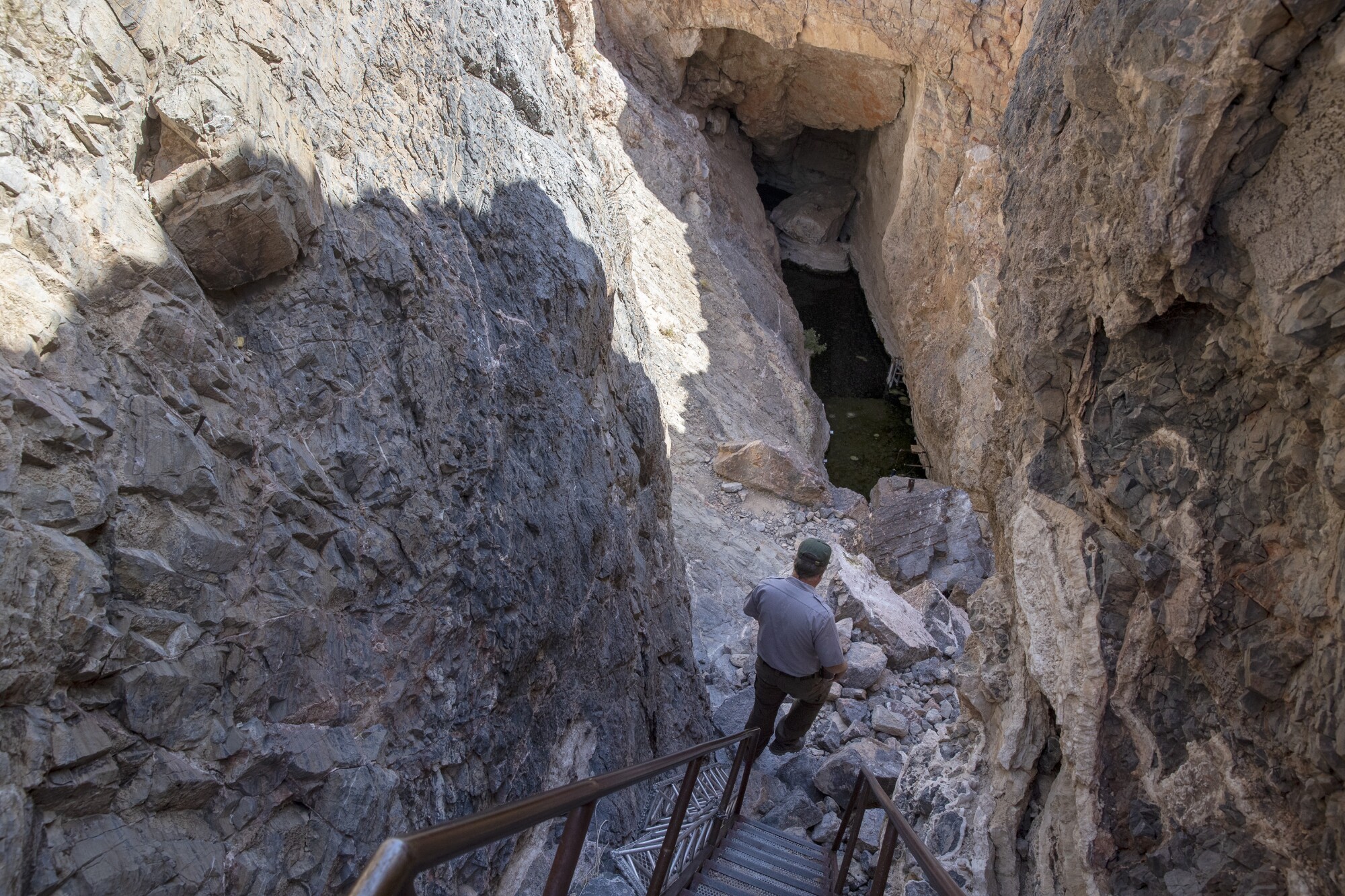
The world’s rarest, most inbred fish clings to existence within the smallest geographic vary of any vertebrate: the shallow finish of an oxygen-deprived pool 10 toes vast, 70 toes lengthy and greater than 500 toes deep.
In early 2013, its numbers plunged to 35, and biologists feared the species lengthy considered a logo of the desert conservation motion could be gone inside a yr.
However since then, the fish has paddled again from the brink, reaching a complete inhabitants — within the wild and in captivity — of about 475 this spring, which is the peak of the breeding season.
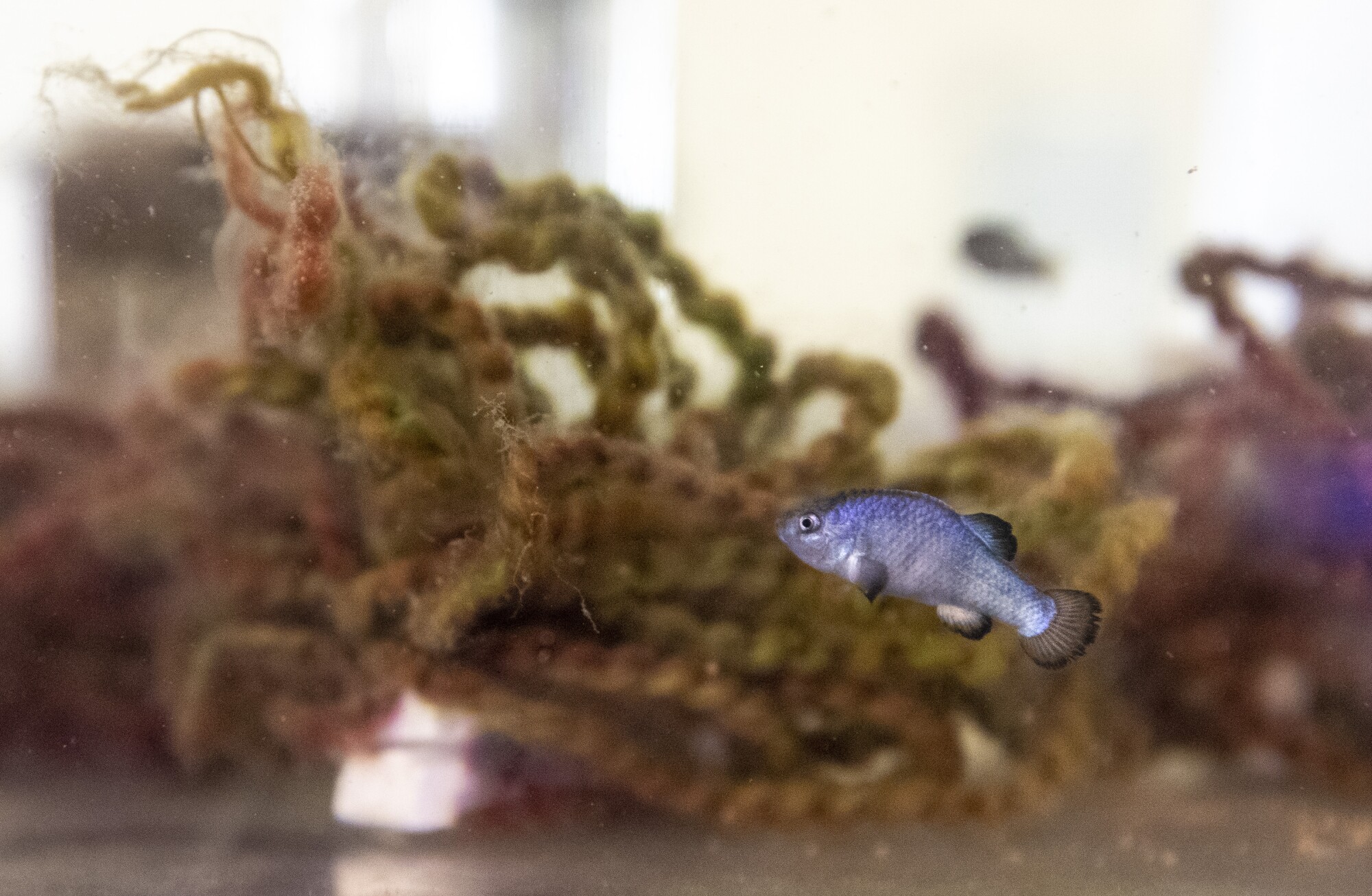
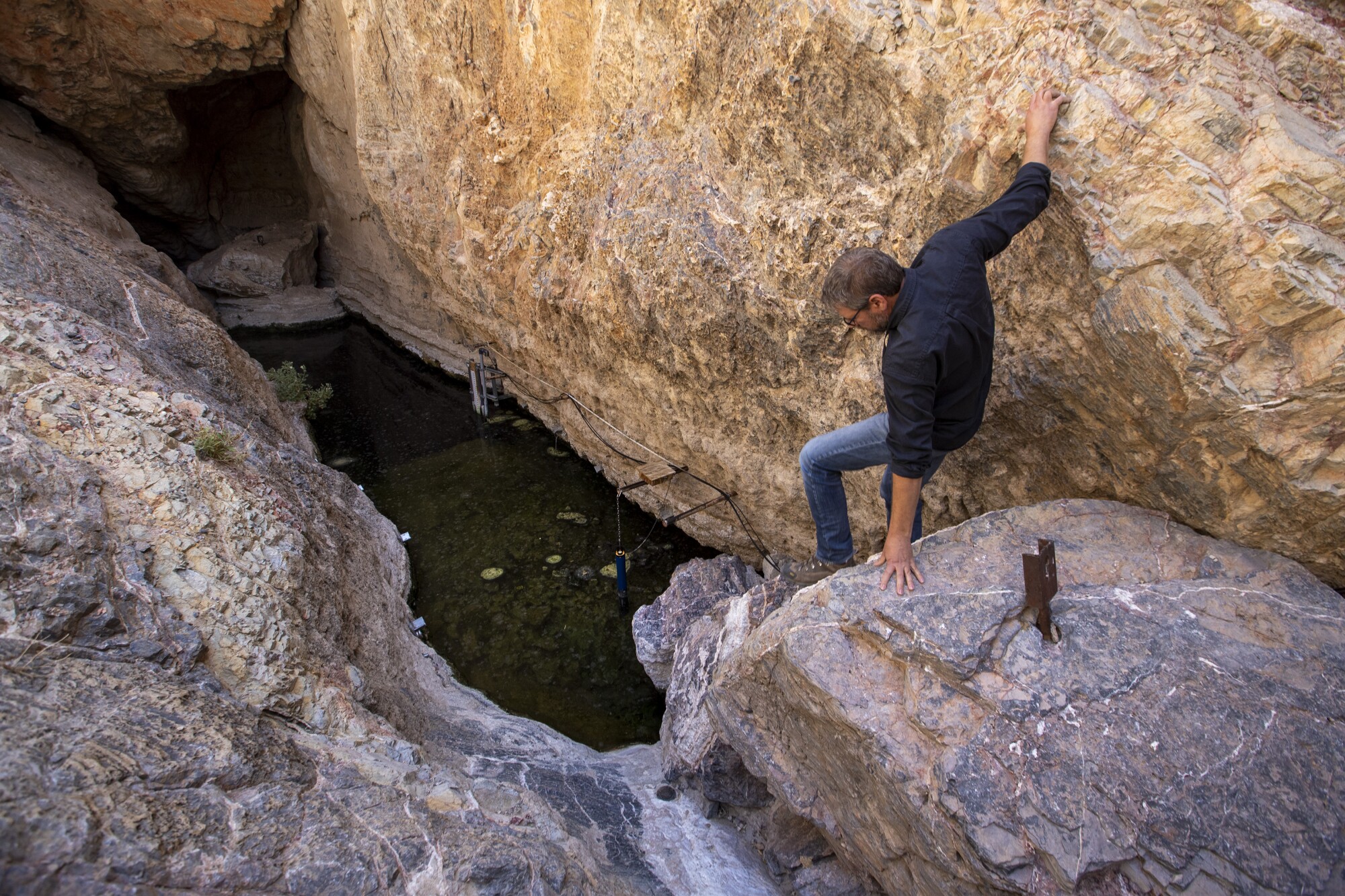
“It offers me goose bumps figuring out that their numbers have risen,” stated Kevin Wilson, aquatic ecologist for Dying Valley Nationwide Park. As he gazed into the uncovered aquifer that has been their house since maybe the top of the Ice Age, scores of the inch-long iridescent blue fish had been searching lazily, or nipping at one another’s tails.
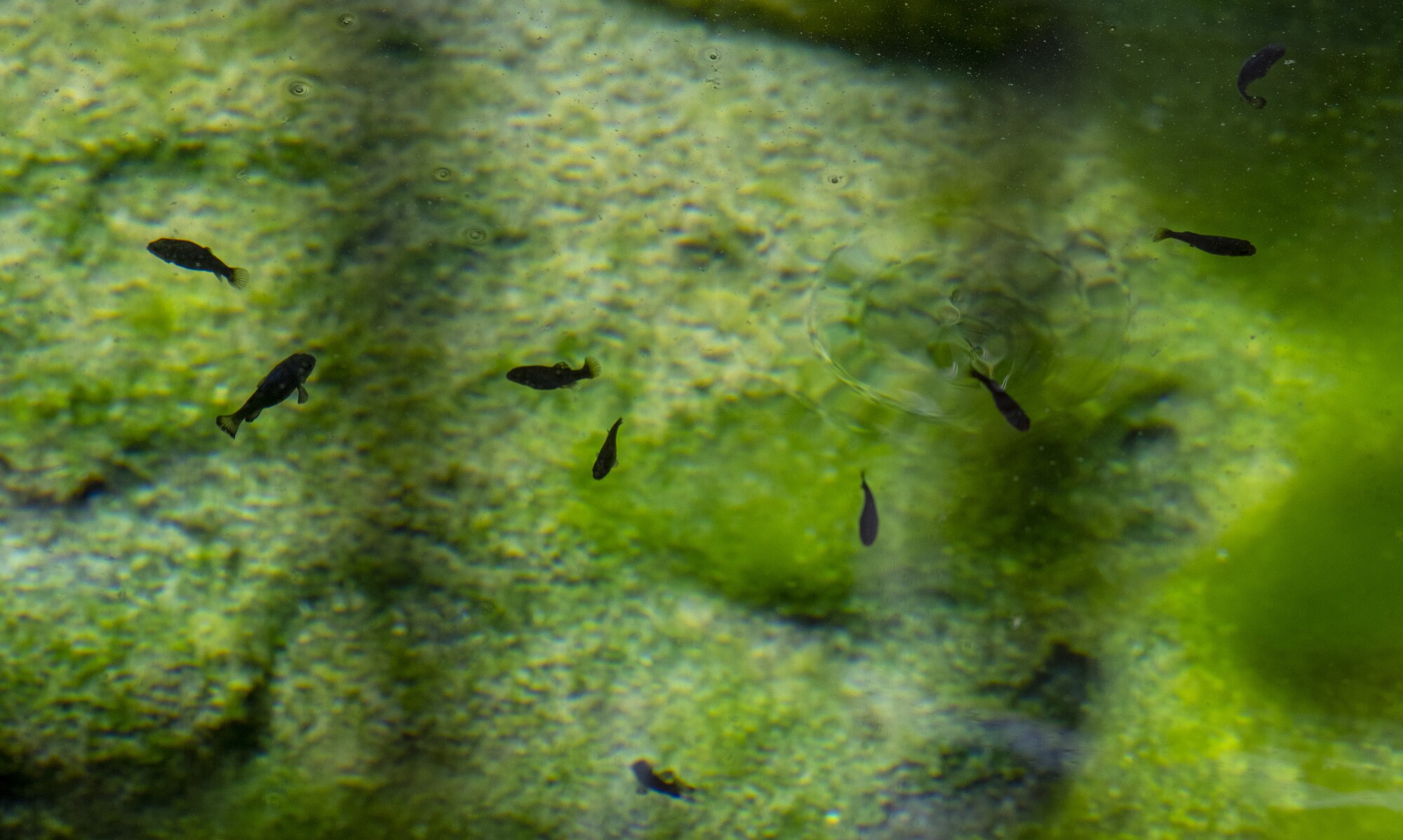
The ranks of Satan’s Gap pupfish have swelled to numbers excessive sufficient, Wilson stated, to try the beforehand unthinkable: amassing samples of intestine contents, fin clippings and tissue from reside specimens for DNA sequencing. That data may assist enhance survival charges with administration methods that take ailments and sophisticated genetic traits into consideration.
Such procedures had been out of the query when the inhabitants was spiraling towards extinction. Because of this, laboratory research relied on putrefied tissue samples obtained from useless pupfish collected by Nationwide Park Service employees.
The prospect of offering solutions to previous mysteries makes the bumper crop of pupfish much more gratifying, Wilson stated.
Amongst primary questions that stay unresolved: Precisely how and when did the fish find yourself within the pool, about 90 miles northwest of Las Vegas?
With a lifespan of 12 months and the bottom genetic variety ever documented within the wild, what are its probabilities of surviving persevering with threats from flash floods, earthquakes and the Mojave Desert’s altering local weather?
Inside quarter-hour of an earthquake someplace on this planet, waves as excessive as 6 toes tall wreak havoc upon the fish’s remoted area.
A 2015 genetic examine led by Christopher Martin, a professor at UC Berkeley specializing within the origins of biodiversity, referenced earlier analysis suggesting that the likelihood of Satan’s Gap pupfish extinction inside 50 years exceeded 80%.
“It’s thrilling to see that this fish is doing effectively and never going to go extinct in a couple of years,” Martin stated.
“We need to know as a lot as we probably can about them,” he added. “So, as their numbers enhance within the wild and within the facility, we will start to consider elevating a colony within the laboratory.”
Michael Schwemm, a senior fish biologist for the U.S. Fish and Wildlife Service, agrees. A pupfish revival, he stated, “permits extra alternative for examine and to discover new administration choices.”
Human interactions with wild Satan’s Gap pupfish are restricted by a strategic administration plan developed by wildlife authorities. Underneath it, intrusive analysis would solely be allowed if the inhabitants reaches 300 or extra for 3 consecutive years.
“It could be time to regulate these guidelines,” Wilson stated.
Regardless of a decades-long rescue effort nevertheless, the Satan’s Gap pupfish lives a solitary life within the turquoise waters of a subterranean fissure on the backside of a limestone despair that makes defending it a problem.
An historical 23-square-yard slab of rock that juts out into the pool, only a few toes under the floor, is vital to its survival. The fish spawn on the slab, which is roofed with its main supply of meals, skinny meadows of inexperienced algae.
Females lay their eggs within the geothermically heated pool that has been a continuing 93 levels, which is approaching the higher physiological restrict for the species.
In 1952, President Harry S. Truman had the distinctive fish and its pocket ecology added to Dying Valley as a protecting measure.
The Satan’s Gap pupfish thrived till the late Nineteen Sixties, when the water stage and the numbers of fish started to fall precipitously due to irrigation pumping.
The inhabitants crash triggered a basic environmental conflict between conservationists, who needed to cease the pumping to avoid wasting the fish, and locals who positioned the next worth on financial progress.
Two in style bumper stickers on the time declared “Save the Pupfish” and “Kill the Pupfish.”
The battle culminated in a landmark 1976 U.S. Supreme Court docket resolution affirming federal groundwater rights to the fish’s fragile habitat.
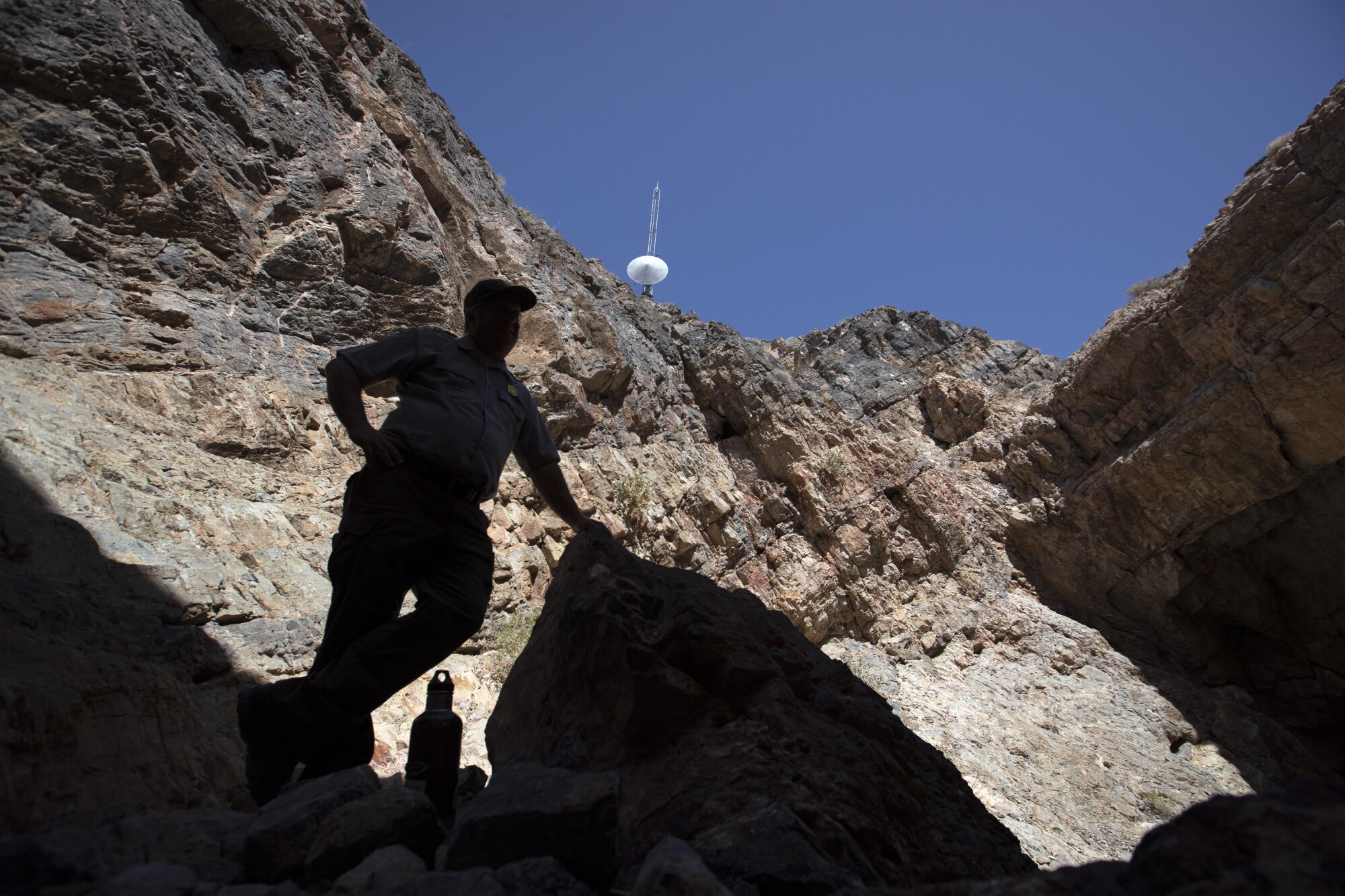
Federal authorities tried to safe the fish’s future by surrounding the opening with 10-foot fencing capped with barbed wire, surveillance cameras and radio antennas.
However the pupfish’s troubles had been removed from over.
Subsequent a long time noticed a gradual decline in inhabitants and the pupfish disaster of Sept. 11, 2004: Empty fish traps had been stacked by researchers on dry land, however a flash flood despatched them tumbling into the pool. The traps ended up on the shelf with 80 expired fish in them.
Later, a trespassing incident led to the arrests of three males on felony expenses in reference to a drunken rampage at Satan’s Gap, the place a pupfish was discovered useless. They left behind loads of proof: beer cans, underwear, vomit, a cellphone and a pockets.
In 2013, a panic set in when it appeared extinction was imminent. Wildlife authorities put in clumps of aquarium crops the place infants may disguise from predatory adults.
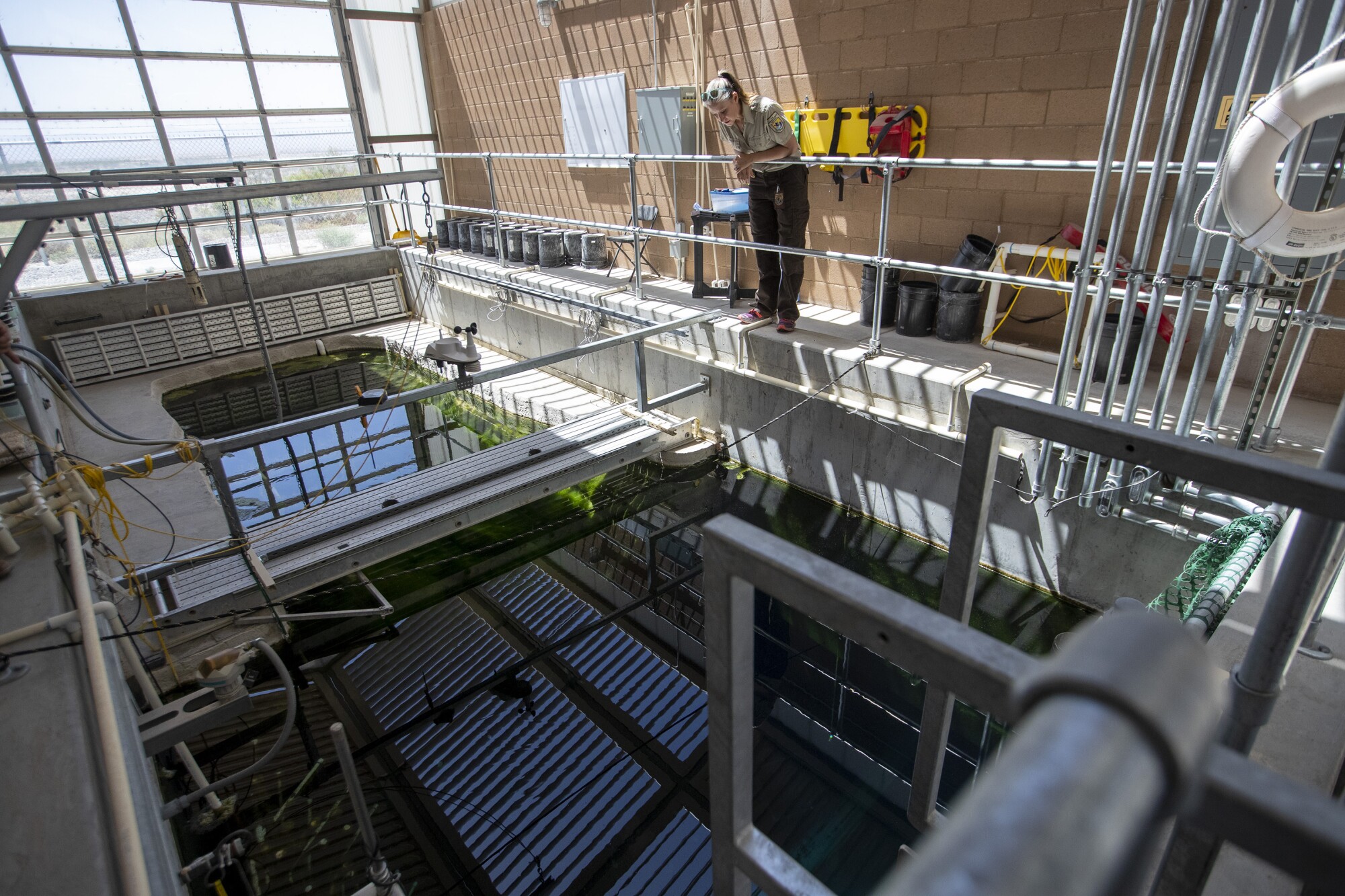
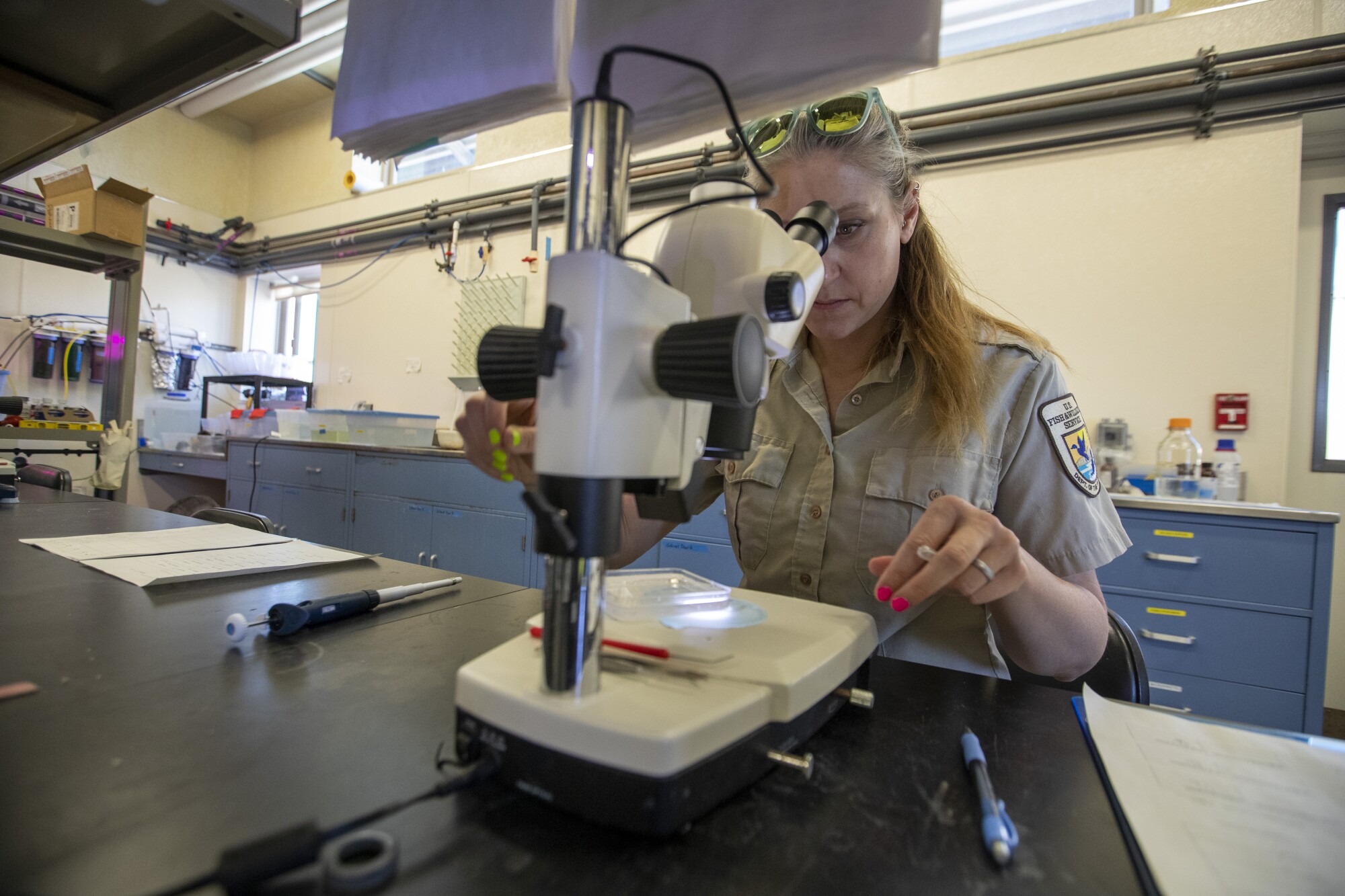
In a collaborative effort involving the U.S. Fish and Wildlife Service, the Nationwide Park Service and the Nevada Division of Wildlife, biologists collected a batch of Satan’s Gap pupfish eggs and took them to the newly constructed Ash Meadows Fish Conservation Facility close by.
Their objective was to ascertain a captive colony of the fish within the facility, which incorporates laboratory aquariums and a $4.5-million 100,000-gallon tank constructed as a duplicate of the pure rock tub.
Now, “we’re growing plans to breed massive numbers of Satan’s Gap pupfish,” stated Jennifer Gumm, supervisor of the ability.
Within the meantime, Satan’s Gap pupfish within the wild nonetheless face critical issues as a result of their precarious life cycle and the environmental extremes that go to their hellish habitat.
“If this fish went extinct on my watch,” stated Wilson, “I’d be haunted for the remainder of my life by this query: “What didn’t I do?”
Post a Comment