
With 80% of its electrical energy coming from hydropower, the province of Sichuan in southern China has been lauded as a mannequin for a clear vitality future within the nation most vital to the worldwide struggle towards local weather change.
The province normally has such an abundance of energy that it sends a surplus east to Shanghai and different cities.
However a historic drought is testing its religion in carbon-free vitality. For a lot of August, decrease river flows dramatically lowered the provision of electrical energy whereas a report warmth wave elevated demand.
The consequence: rolling blackouts that shut down factories and left hundreds of thousands of individuals determined for tactics to chill down.
Alva Zhou, a 23-year-old graduate pupil, was visiting her household within the metropolis of Deyang when the facility went out. Initially, they thought they could wait it out of their air-conditioned automotive.
However they quickly realized the outage was nowhere close to over and located a lodge with electrical energy. That was too costly to do nightly, forcing the household again house, the place the 104-degree warmth made it tough to sleep and the web was typically out.
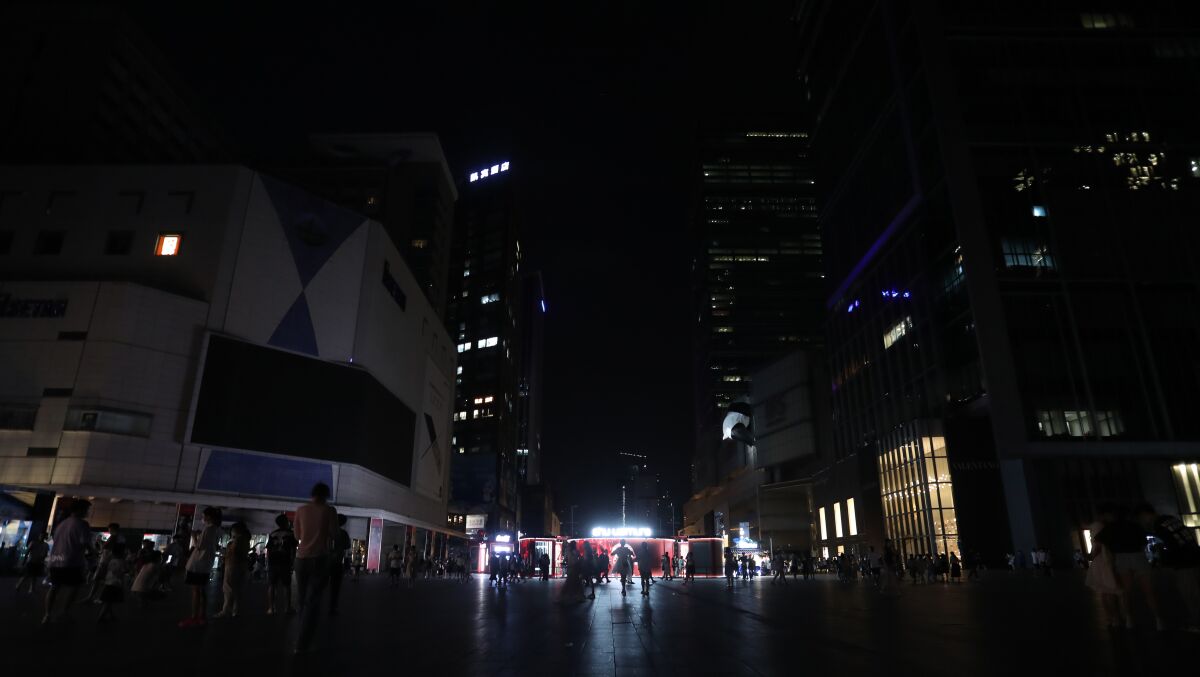
“To hastily halt energy has a big impact on life and work,” Zhou mentioned. “There’s no strategy to go on.”
Because the world strives to wean itself from fossil fuels to stave off the worst results of local weather change — together with sea degree rise, extra extreme storms and extra frequent droughts — it has change into clear that renewables have their very own shortcomings. Transitioning to them because the planet continues to heat is way from painless.
The hazard is that vitality crunches just like the one in Sichuan might push China — the world’s largest emitter of heat-trapping greenhouse gases — to revert to burning extra of its huge coal reserves. Different nations, most notably India, face the identical temptation as their electrical energy calls for develop.
Although the Chinese language authorities has dedicated to formidable carbon reductions, the turmoil from extra energy shortagesis the very last thing Chinese language President Xi Jinping wants as he prepares to interrupt precedent and start a 3rd five-year time period.
“Any energy cuts or limitations would create potential social instability. That’s what the Chinese language authorities doesn’t need,” mentioned Hongqiao Liu, a Paris-based vitality coverage guide. “This Sichuan occasion actually exposes all of the bottlenecks within the present system.”
This summer time’s drought and intense warmth wave have killed crops and livestock, threatening the nation’s meals provide. Factories halted operations due to energy cuts, additional weighing on industrial output at a time of sluggish financial progress.
On Chinese language social media, electrical automobile drivers complained of hourlong strains at charging stations. Workplace staff toiling away with out air con posted footage of huge ice blocks stationed round desks and in entrance of electrical followers.
Others shared images of small bottles of an natural liquid, utilized in conventional Chinese language drugs to alleviate the consequences of summer time warmth.
Greater than 1,000 miles away, skyscrapers alongside Shanghai’s downtown waterfront went darkish for 2 days too because of the facility scarcity in Sichuan.
“This actually served as a wake-up name for coverage makers that these conventional energy planning fashions they’ve used previously is perhaps in danger,” mentioned Cosimo Ries, an vitality coverage analyst on the analysis agency Trivium China. “What occurred in Sichuan this yr is a really clear instance of this, not just for itself but additionally for the remainder of China if local weather change continues to accentuate.”
The scarcity additionally renewed debate on the dependability of renewables, and whether or not China would do higher to spend money on extra coal relatively than part it out. Some analysts known as for dashing up the vitality transition, whereas others argued that the nation ought to decelerate.
China was answerable for about 33% of world emissions final yr, in contrast with about 13% for the USA, the No. 2 emitter, in accordance with the Worldwide Vitality Company.
However by some measures, China has been extra aggressive in investing in clear vitality and carbon reductions. It received 15% of its vitality from renewables final yr, forward of the USA at 12%, and it reportedly has plans to greater than double its wind and photo voltaic capability by the top of 2025.
Analysts mentioned China stays on monitor to satisfy its goal to succeed in peak carbon emissions by 2030 and carbon neutrality by 2060.
But it surely nonetheless received 85% of its vitality from fossil fuels final yr, together with 55% from coal, the dirtiest possibility.
Hydropower just isn't the one renewable vitality supply threatened by hotter climates, mentioned Muyi Yang, senior Asia electrical energy coverage analyst on the London-basedenergy assume tank Ember. Excessive warmth additionally tends to tamp down wind flows, and the effectiveness of photo voltaic panels drops when temperatures climb too excessive.
“Excessive climate is testing the resilience of energy programs all over the world,” Yang mentioned. “The principle commonality is that the clear energy transition just isn't solely about constructing extra wind, photo voltaic and hydro. It’s actually about rebuilding the entire energy system.”
In California, the state’s energy grid narrowly averted widespread outages final week throughout a blistering warmth wave, after officers pleaded with residents to curb electrical energy utilization. Europe’s worst drought in 500 years is hitting crop yields, exacerbating wildfire dangers and weighing on hydropower era.
Specialists in China have proposed enhancing energy storage and grid flexibility to allocate provide and handle demand in occasions of pressure. Warning that excessive warmth and energy provide strains might change into extra commonplace, the federal government has elevated monetary help to energy turbines to spice up reliability.
David Fishman, senior supervisor on the Hong Kong-based consultancy the Lantau Group, mentioned enhancing China’s comparatively nascent energy grid could come simpler than for nations with older, established programs. However till the infrastructure can accommodate such shocks, the system will stay on the mercy of the temperamental local weather.
“It took an excessive climate occasion to reveal that. You possibly can say that it’s an outlier, however on this climate-changing world, is it actually?” Fishman mentioned. “All it might take is a return of the recent climate and also you’d have issues once more.”
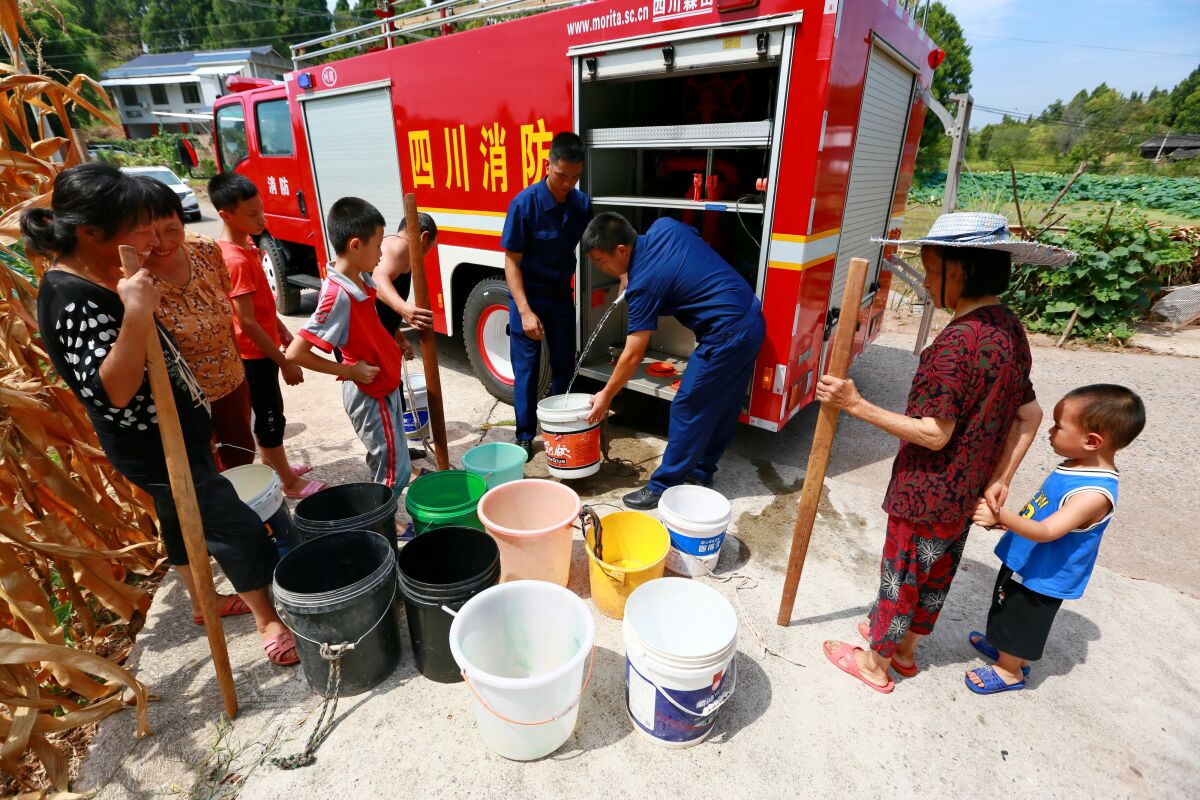
By the top of China’s hottest August of all time, the dry spell gave strategy to heavy rains in Sichuan, spurring evacuations and warnings of mudslides and floods.
Zhou mentioned she has lengthy believed that local weather change would worsen. However till this summer time, her understanding largely got here from social media and information stories, and her creativeness focused on sinking coastal cities.
“This type of state of affairs had by no means occurred earlier than, so I believe on local weather change I’m turning into extra pessimistic,” she mentioned.
Although the electrical energy provide at Zhou’s house has returned to regular, she’s unsure what different challenges excessive climate may deliver.
Over two weeks of periodic energy outages, she spent 4 nights in several lodge rooms along with her dad and mom and youthful sister, in the hunt for some reduction from the warmth.
Throughout their second lodge go to, the electrical energy went out. With the elevator out of service, Zhou needed to carry her mom, who was nursing a damaged leg, down two flights of stairs.
Lodge rooms turned scarcer and dearer as increasingly more individuals sought refuge. Zhou and her household began visiting teahouses to chill down as a substitute.
Lastly, they discovered a extra everlasting answer to maintain their air conditioners on at house: a small $200 generator powered by gasoline.
David Shen of The Occasions’ Taipei bureau contributed to this report.
Post a Comment