On the Shelf
Classes
By Ian McEwan
Knopf: 448 pages, $30
When you purchase books linked on our website, The Occasions might earn a fee from Bookshop.org, whose charges help unbiased bookstores.
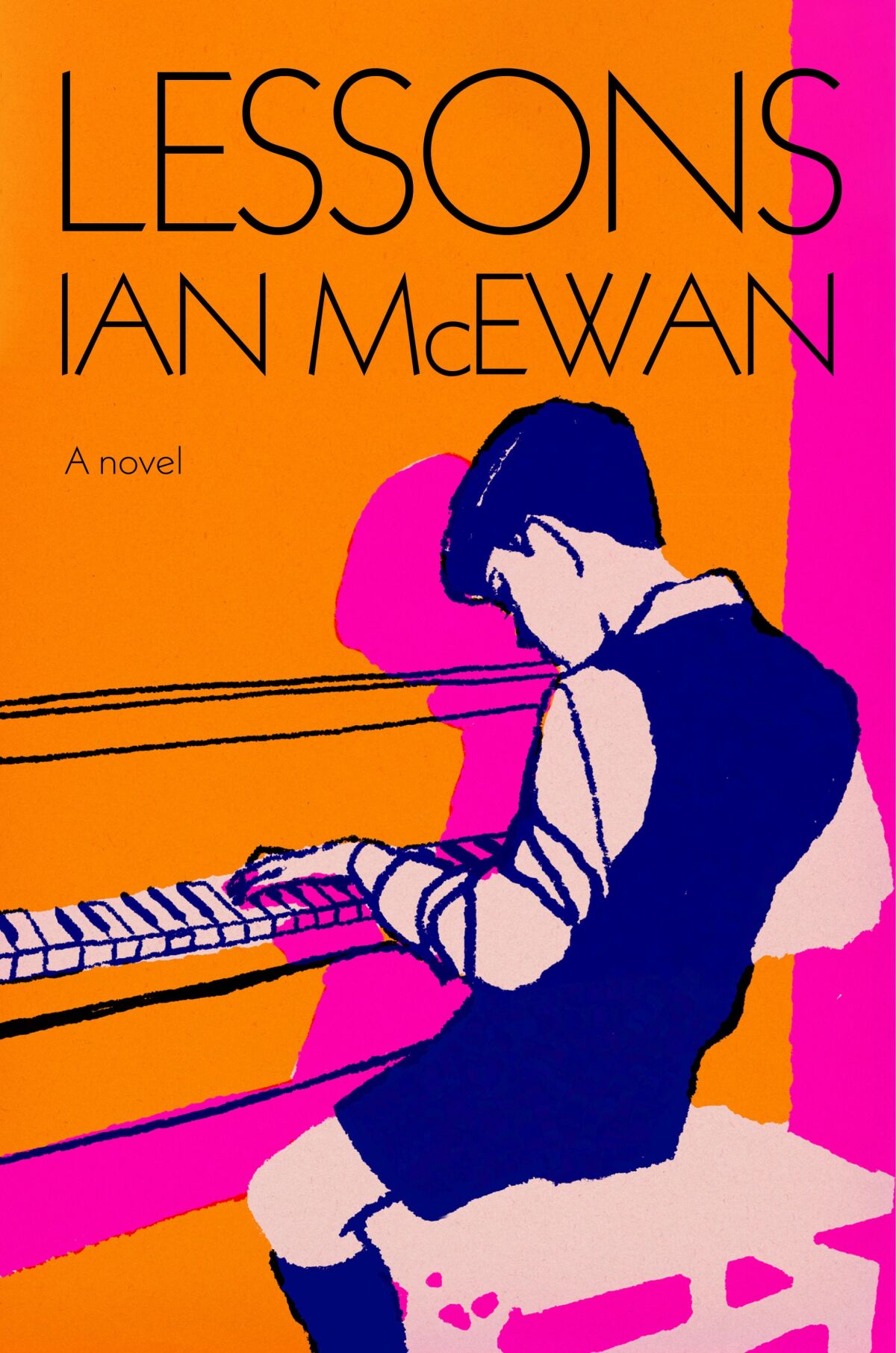
As he reached his 70s, Ian McEwan realized he had lived sufficient and seen sufficient to put in writing an epic. Whereas he has usually integrated the sweep of politics and historical past into novels together with “The Harmless,” “Amsterdam” and “Atonement,” his new guide, “Classes,” is of a special scale.
For starters, it covers the whole lot from World Battle II to the local weather disaster and COVID lockdown, with the whole lot from the Suez Canal disaster to Chernobyl in between. However whereas the scope could also be huge, the main focus is way narrower: a personality examine of Roland Baines.
“The bigger image gained’t have a lot affect with out the small issues that make up our lives,” McEwan says. “They should feed off one another.”
For Roland, the fears and freedoms of childhood give method to an adolescence marked by sexual abuse from a piano instructor (though it takes him a long time to see it as something however an affair). He later journeys into East Berlin and takes stands in British politics at the same time as he roams via an unsettled existence.
Roland’s first marriage ends so all of a sudden he's suspected by the police of homicide, but it additionally supplies him the son who provides his life form and which means. His second love involves him regularly and , though it too brings each loss and life. Roland muddles via all of it with out ever actually discovering closure. “That’s one in every of my most detested phrases,” McEwan says. “It doesn’t exist.”
Over a video name from his house in London, McEwan spoke to The Occasions, in a dialog edited for readability and house, about why this novel feels so private, in addition to his “obligation to optimism” concerning the future.
What impressed the scope of “Classes”?
I’m coming into the October or November of my very own life; I used to be excited about what it might be like to take a look at the entire life of somebody. I strive beginning every novel as if it have been my first, however there’s no escaping the self. This time, although, I did really feel a distinction — I felt as if I have been bringing the whole lot I knew and the whole lot I’d written.
One author buddy learn it and wrote, “This reads like your LAST NOVEL.” I knew what he meant. This dedication to the entire life is one thing I might solely have accomplished now — I needed to lead a complete life.
Presuming it’s not your remaining novel, was it tough beginning over after this?
I felt like I’ve given this guide completely the whole lot. I really feel utterly emptied out, however fairly pleasantly so. I’ve since written some journalism and a brief story — I used to be commissioned to put in writing one which was optimistic concerning the future, which I discovered irresistible, though my story is a really nuanced optimism. I nonetheless must get this novel revealed and behind me. I want to speak myself out about it. There’ll come a time once I can’t say the title with out desirous to throw up. However I do not know what’s subsequent. I've two or three concepts however none are fairly pressing.
This novel accommodates extra of your life than standard. Was that a problem or a pleasure?
I’ve had a sneaking admiration and a mistrust on the similar time of authors who endlessly plunder their life. I devoted myself to a lifetime of invention, although little bits of my life would sneak in. However this time I assumed I’m going to take my complete existence and wind it right into a fiction.
I knew I needed to put in writing about my misplaced brother. [McEwan discovered late in life that he had a brother whom his parents gave up for adoption before they were married.] That story is a lot concerning the intrusion of public occasions — the Second World Battle — into unusual individuals’s lives. And I needed to put in writing concerning the Suez Canal incident, which had a big impact on my life: I discovered myself on this military camp like Roland does; my father was busy, my mom was away, and I ran free for 10 days with a few pals. In the middle of writing these scenes I spotted one purpose I grew to become a author was to remain obtainable for adventures. It was rooted on this concept that I touched heaven and freedom in that camp.
Nonetheless, a lot of it's fiction. The three most necessary girls in Roland’s life are all completely fictitious. However I actually needed to inhabit this character so for sure scenes I ended myself doing the standard factor of creating notes about how the scenes may go and I'd get to them empty-handed. It was a really completely different writing expertise.
The sexual abuse, which can also be fictitious, haunts the novel. Was childhood trauma a central theme?
You may say as a substitute of trauma it’s expertise. All of us have difficulties in our lives and my sense of it's that they’re by no means solved, they simply turn into a part of the luggage you carry in your again. Roland isn't ruined completely by being despatched away to boarding faculty, nevertheless it makes main shifts for him in a while. He isn't wrecked by his sexual abuse, however his life is actually diverted from the monitor he may need anticipated.
Roland’s first spouse mentioned the piano instructor “rewired” his mind. Had he handled this earlier might he have rewired it once more?
The remedy tradition may proclaim that it might have been magnificent for him if he had gone to an understanding analyst or therapist. My sense is that it might have given him perception into who he was and the way he behaved, however I don’t suppose it might have essentially modified his stressed sexual nature and his slightly elevated notion of what a relationship is supposed to offer.
On the finish, along with his granddaughter, Roland notes it might be a disgrace to show a pleasurable youngsters’s guide right into a lesson. Is that a part of your message right here?
Novels are finest at not delivering classes however at laying all of it on the market. When Roland tells himself he hasn’t discovered a factor in life, that mirrors my very own expertise, in a sure temper. When you’re requested, “Inform me the teachings of life,” you both have to put in writing “Classes” or resort to banalities like “Kindness is sweet” and “Love conquers all” and “Be daring and take possibilities” or “Watch out what you do.” I’ve by no means learn a guide of recommendation that was of any use to me.
Has the ratio of heartbreak to hope tilted in your novels? And does that mirror modifications in you or on this planet?
After the Berlin Wall got here down there was optimism, a way of actual chance and the sense that rationality may very well be utilized to the political order. We’ve misplaced all that. Charting Roland from optimism to foreboding is the Berlin Wall to the January sixth assault, nevertheless it might have been invasion of Ukraine or the newest ice soften in Greenland. That 30-year curve is a part of the dissonant music of Roland’s life.
My household was right here yesterday, and when the grandchildren have been in mattress we have been speaking about how their lives will unfold. Listening to my sons and daughters-in-law, I notice they share lots of my foreboding. I gave lots of that foreboding to Roland. On the similar time, he was feeling huge hope on a private stage. This pressure appears irresolvable.
The place does that go away Roland. And us?
I really feel some sort of obligation to optimism. The world is so advanced and so interconnected that it’s fairly potential there are one million factors of sunshine all over the world in connection to the local weather emergency that can eventually join up. It’s considerably late, however we'd fumble our manner via. Or we'd not. It’s the combo of hope and foreboding makes life so sophisticated.
Post a Comment