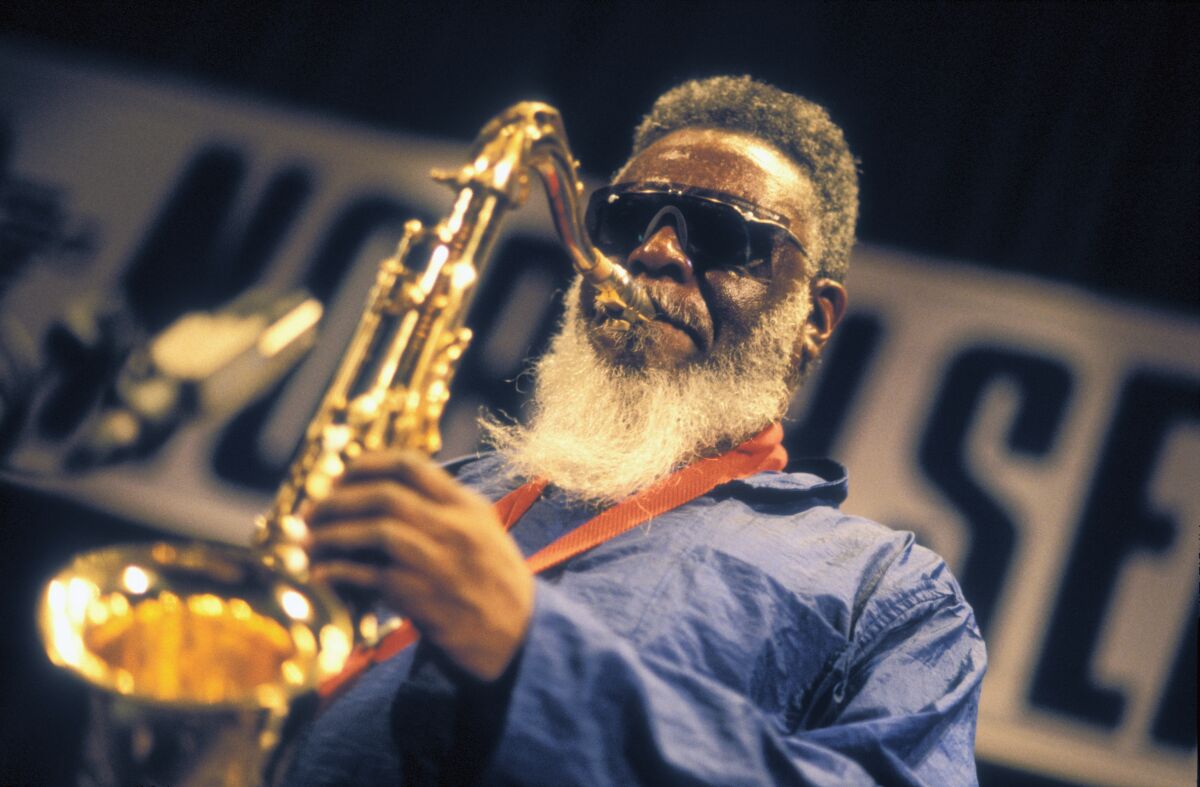
Pharoah Sanders, the legendary jazz saxophonist maybe greatest identified for his transcendent work with John Coltrane and for a solo run for Impulse Information starting within the mid-Sixties, and who helped outline the so-called non secular jazz motion, has died. He was 81.
Sanders died Saturday morning in Los Angeles, his document label, Luaka Bop, confirmed on Twitter. The reason for loss of life was not given.
“We're devastated to share that Pharoah Sanders has handed away,” learn the label’s assertion. “He died peacefully surrounded by loving household and buddies in Los Angeles earlier this morning. All the time and without end essentially the most stunning human being, might he relaxation in peace.”
Born in Little Rock, Ark., right into a musical household, Sanders got here up within the San Francisco Bay Space, the place he performed alongside lots of the space’s greatest musicians, together with fellow saxophonists Dewey Redman and Sonny Simmons, pianist Ed Kelly and drummer Smiley Winters.
He moved to New York in 1961, the place at first he was unable to make a dwelling together with his music however quickly discovered work jamming with Solar Ra, Don Cherry, Billy Higgins and different jazz greats.
In 1965, Sanders joined Coltrane’s band as a tenor saxophonist and collectively they broke the normal molds of jazz in albums like “Ascension” and “Meditations.”
“Coltrane’s ensembles with Sanders have been among the most controversial within the historical past of jazz,” Sanders’ web site stated.
“Their music represents a close to whole desertion of conventional jazz ideas, like swing and practical concord, in favor of a teeming, irregularly structured, natural combination of sound for sound’s sake. Energy was a necessity in that band, and as Coltrane realized, Sanders had it in abundance.”
After Coltrane’s loss of life in 1967, Sanders briefly carried out together with his widow, Alice Coltrane, earlier than he cut up to do his personal tasks.
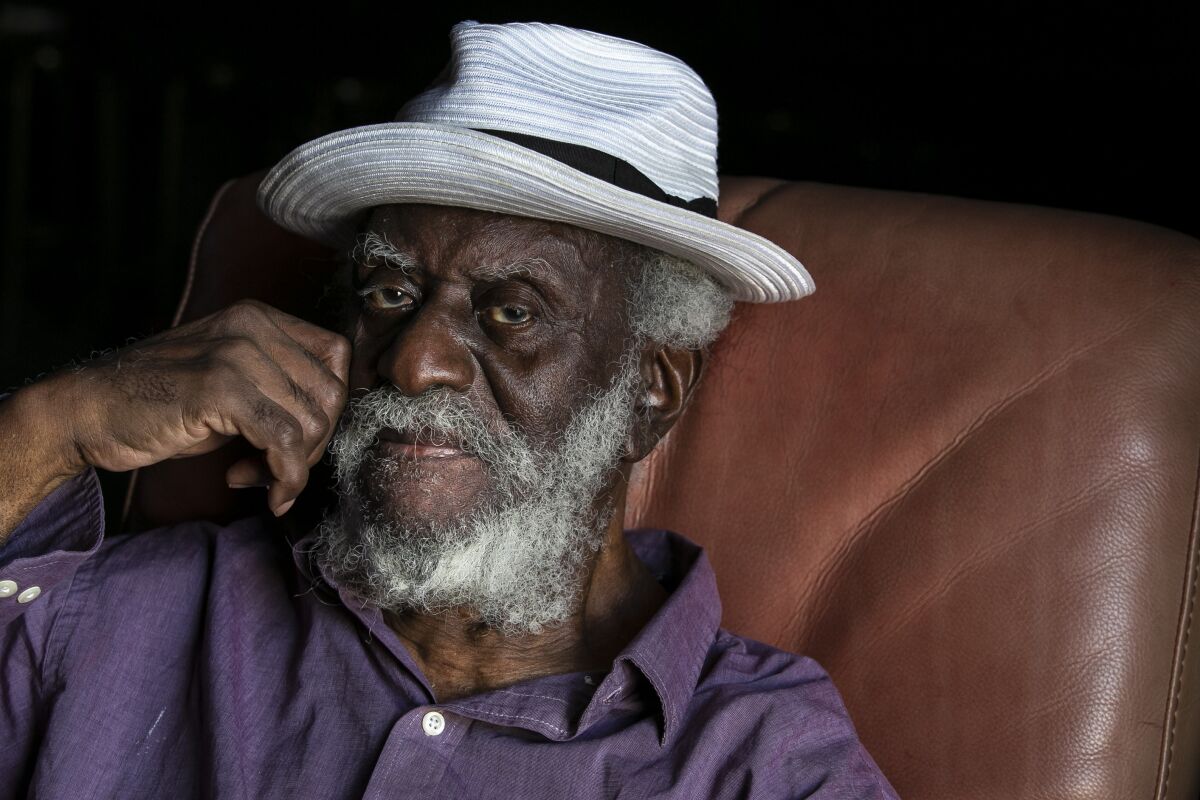
In 1969, Sanders launched his most well-known work, “Karma,” which featured “The Creator Has a Grasp Plan,” a recording that turned some of the influential tracks of its time.
Sanders continued to launch information all through the Seventies and ’80s as a bandleader and sideman earlier than his output started to sluggish within the ’90s.
Following an extended hiatus, he returned to the studio in 2021 to document “Guarantees” with digital music producer Floating Factors and the London Symphony Orchestra.
“My stunning buddy handed away this morning,” wrote Floating Factors on Instagram following information of his loss of life. “I'm so fortunate to have identified this man, and we're all blessed to have his artwork stick with us without end. Thanks Pharoah.”
Sanders’ advanced and structurally fluid instrumental concepts would come to affect subsequent generations of musicians, together with the L.A. scene that produced Flying Lotus, Kamasi Washington, Madlib, Carlos Niño and Terrace Martin.
In a 2020 interview with the Los Angeles Occasions, Sanders was soft-spoken and would reply to questions with single-sentence solutions. When requested about his well-known work “The Creator Has a Grasp Plan” and whether or not the state of the world made him doubt any grand design, his reply was quick: “The creator has a grasp plan. That’s it.”
At his aspect was his longtime buddy and saxophonist Azar Lawrence, who added: “The message that Pharoah has continued to offer us is considered one of continued hope. The creator has a grasp plan — which means that even throughout this era, all of that is throughout the grasp plan. Every little thing’s working collectively for our good.”
Post a Comment